
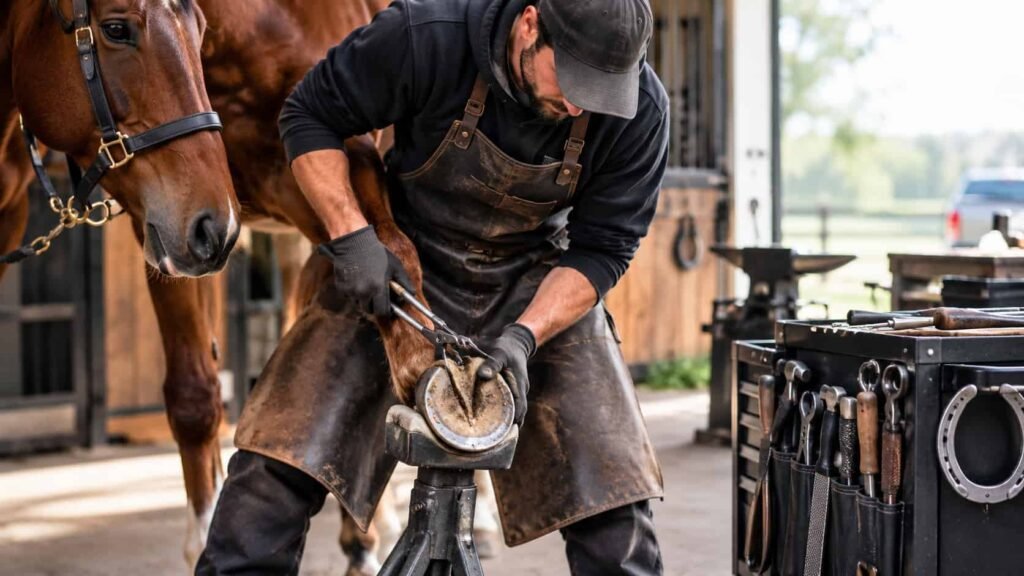
The ancient craft of the farrier combines traditional blacksmithing with advanced equine science, focusing on the maintenance, care, and health of equine hooves.
According to official data from Jobs and Skills Australia, farriers inspect, trim, and shape hooves while expertly forming, fitting, and nailing horseshoes.
This professional path requires a unique blend of physical endurance, specialised knowledge, and a deep understanding of animal behaviour to ensure horses remain sound and high-performing throughout their working lives.
Understanding the Role and Daily Responsibilities
Being a professional farrier involves much more than simply hammering metal into shape.
Equine hooves grow continuously—much like human fingernails—and must be properly managed to prevent lameness, disease, and structural breakdown.
- Hoof Assessment and Inspection: A professional evaluates the overall conformation, balance, movement, and soundness of the horse before any physical work begins.
- Trimming and Cleaning: Excess hoof wall, exfoliating sole material, and overgrown frog tissue are carefully removed using specialised equipment to restore natural balance.
- Shoe Selection and Customisation: Professionals select, heat, and shape metal stock or lightweight aluminium plates to match the exact dimensions and biomechanical needs of the animal’s foot.
- Nailing and Fitting: The manufactured shoe is secured safely to the insensitive hoof wall, ensuring proper weight distribution, joint alignment, and long-term comfort.
Essential Equipment and Specialised Gear
Mastering this demanding trade requires high-grade equipment capable of withstanding extreme forge heat, heavy daily use, and rigorous mobile travel.
Professionals rely on an extensive array of instruments ranging from rasps and nippers to hammers, anvils, and portable forges.
To explore the foundational instruments used in professional practice, practitioners often look to specialised suppliers like farrier tools to outfit their mobile service rigs.
Having reliable, durable gear ensures absolute precision when modifying shoes for standard maintenance or complex corrective and therapeutic requirements.
To see these instruments, safety protocols, and forging techniques applied in a practical setting, you can watch this Horseshoeing Basics Demonstration.
The modern farrier trade combines traditional craftsmanship with advances in equine science, technology, and animal welfare. Farriers are skilled professionals who trim horses’ hooves, fit horseshoes, and help maintain healthy movement and comfort. Their work supports horses used in recreational riding, racing, farming, and competitive sports.
Today, farriery involves more than simply fitting metal shoes. Professionals assess hoof balance, observe movement, and identify signs of common problems, including cracks, infections, and abnormal hoof growth. Depending on each horse’s needs, they may use conventional steel shoes, lightweight aluminum options, synthetic materials, or therapeutic shoeing techniques.
Veterinary collaboration has also become increasingly important. Farriers and veterinarians can work together to manage lameness, hoof injuries, and other complex conditions. Modern diagnostic tools, including radiographic imaging, can help professionals make informed decisions about hoof balance and shoe placement.
Training and continuing education remain essential in this evolving trade. Apprenticeships, professional clinics, and industry certifications help farriers improve their practical skills and understanding of equine biomechanics. Digital tools and mobile applications also support appointment scheduling, customer communication, and business management.
As awareness of animal welfare grows, individualized hoof care is becoming increasingly important. Whether a horse requires regular trimming or specialized shoeing, a knowledgeable farrier plays a vital role in maintaining hoof health, mobility, and long-term soundness.
Training, Apprenticeships, and Career Pathways
Entering this multifaceted profession typically involves structured vocational pathways, rigorous physical conditioning, and years of hands-on mentorship under master craftsmen.
In Australia, aspiring practitioners often complete structured trade credentials such as the Certificate III in Farriery, which covers core competencies like handling large animals safely, recognising common equine ailments, and maintaining heavy metalwork equipment.
Building a sustainable, long-term career requires dedication, continuous learning, resilience against physical fatigue, and an unwavering commitment to animal welfare.
Farriers work closely with veterinarians, horse owners, and trainers to diagnose and treat complex lameness issues, making them an indispensable part of the wider equine health ecosystem.