
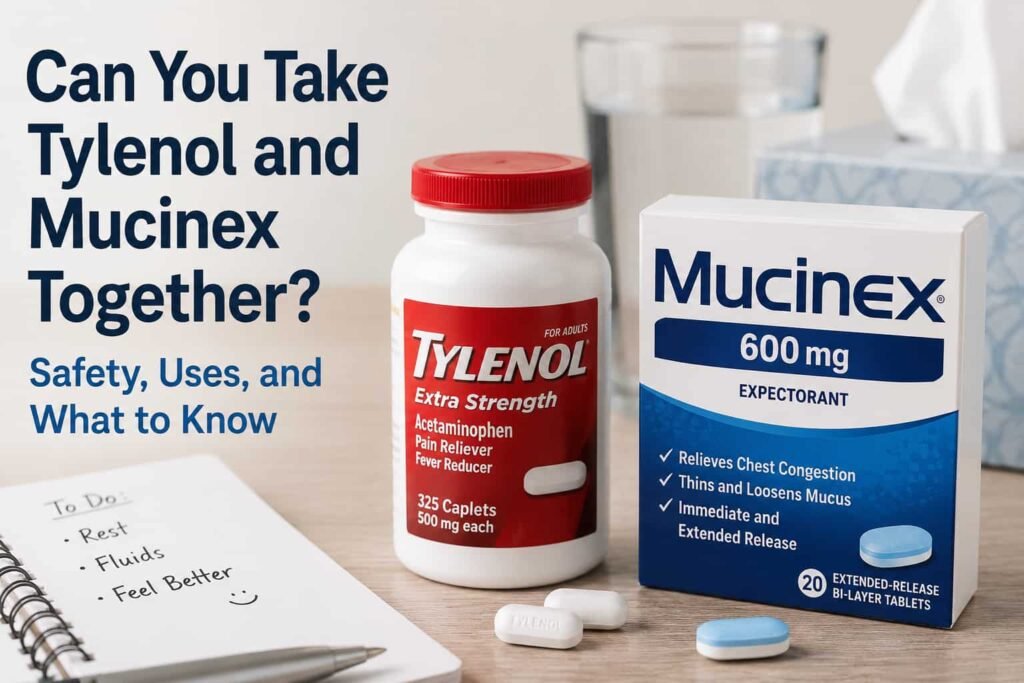
When you are dealing with a cold, flu-like symptoms, congestion, cough, body aches, or a fever, you may wonder: can you take Tylenol and Mucinex together? In many cases, the answer is yes—but it depends on the specific Mucinex product you are using and the active ingredients it contains.
Tylenol contains acetaminophen, a medicine commonly used to reduce fever and relieve mild to moderate pain. Mucinex is a brand name used for several cough and cold products, and different versions may contain different active ingredients. Because of these differences, checking the Drug Facts label is essential before combining medicines.
Table of Contents
What Are Tylenol and Mucinex Used For?
Tylenol is primarily used for temporary relief of pain and fever. Its active ingredient, acetaminophen, is found in many over-the-counter and prescription medicines, which means it is important to consider your total intake from all products.
Original Mucinex products commonly contain guaifenesin, an expectorant that helps loosen and thin mucus in the airways, making it easier to cough up. Other products sold under the Mucinex brand may combine guaifenesin with additional ingredients for symptoms such as cough, congestion, or other cold-related complaints.
This is why the question is not simply whether Tylenol and “Mucinex” can be taken together. The more important question is: Which Mucinex product are you taking, and what active ingredients does it contain?
Can You Take Tylenol and Mucinex Together?
If your Mucinex product contains guaifenesin only, it is generally possible to take it with Tylenol when both medicines are used according to their labels or a healthcare professional’s instructions.
For example, a person with a chesty cough and thick mucus may use guaifenesin for mucus relief while using acetaminophen for fever, headache, or body aches.
However, you should always check the active ingredients before combining products. Some multi-symptom cough and cold medicines may already contain acetaminophen. Taking Tylenol in addition to another medicine containing acetaminophen could result in accidentally taking too much. The FDA specifically warns consumers not to use multiple acetaminophen-containing products at the same time without carefully accounting for the total amount taken.
Why Checking the Label Is So Important
Over-the-counter medicines can be confusing because products with similar brand names may have completely different ingredients.
For example, one Mucinex product may contain only an expectorant, while another may include a combination of ingredients intended for cough, congestion, or other symptoms. Some multi-symptom cold and flu products may also contain acetaminophen.
Before taking Tylenol with Mucinex, check the Active Ingredients section on the package. Look specifically for:
- Acetaminophen
- Guaifenesin
- Dextromethorphan
- Decongestants or other combination ingredients
If the product already contains acetaminophen, adding Tylenol may increase your risk of exceeding the recommended amount.
How Much Acetaminophen Is Too Much?
For adults and children ages 12 and older, FDA guidance states that the total amount of acetaminophen from all medicines should generally not exceed 4,000 milligrams in 24 hours. However, individual product labels may set a lower maximum for that specific product, so the package directions should always be followed.
Taking too much acetaminophen can cause serious liver damage. The risk may be especially important for people with liver disease, those who regularly consume three or more alcoholic drinks per day, or individuals taking multiple medications that contain acetaminophen.
Never assume that two cold or pain medicines are safe to combine simply because they are available without a prescription.
Who Should Be Extra Careful?
You should speak with a doctor or pharmacist before combining Tylenol and Mucinex if you:
- Have liver disease
- Regularly consume large amounts of alcohol
- Are pregnant or breastfeeding
- Take prescription medications or multiple over-the-counter products
- Have high blood pressure, heart disease, or certain other medical conditions and are considering a Mucinex product containing a decongestant
- Are giving medicine to a child
Children should receive medication only according to the product’s age and dosing instructions. Never guess a child’s dose or combine multiple products without checking the ingredients.
The Bottom Line
So, can you take Tylenol and Mucinex together? If you are using a Mucinex product containing guaifenesin alone, it can generally be combined with Tylenol when both are taken as directed. However, Mucinex is a brand with multiple formulations, and some combination products may contain additional active ingredients.
The safest approach is simple: read the Drug Facts label, identify every active ingredient, and calculate your total acetaminophen intake from all medicines.
If you are unsure whether your specific Tylenol and Mucinex products can be taken together, a pharmacist or healthcare professional can help you check the combination before you take it. Following the label directions and avoiding duplicate ingredients are two of the most important steps for using over-the-counter cold and pain medicines safely.